

When a doctor recommends surgery for a tumour in the throat or voice box, it is natural to feel worried. Patients often have several questions at once: Will I be able to speak? Will I be able to swallow normally? Will I breathe through my nose, or through an opening in my neck? How long will recovery take?
These are important questions, because the throat and voice box are involved in breathing, speaking and swallowing. Cancer surgery in this region must therefore do more than remove disease. Wherever medically safe, treatment planning also aims to preserve function, support rehabilitation and protect quality of life.
Not every patient needs the same operation. Some early tumours can be removed through the mouth using a laser or specialised instruments. Other patients may need removal of part of the larynx, while advanced disease may require complete removal of the voice box. The most appropriate approach depends on the exact site and stage of the tumour, its relationship to nearby structures, the patient’s general health and the expected effect of each treatment on speech and swallowing.
This guide explains throat and voice box surgery in straightforward language so that patients and families can prepare for a meaningful discussion with their cancer team.

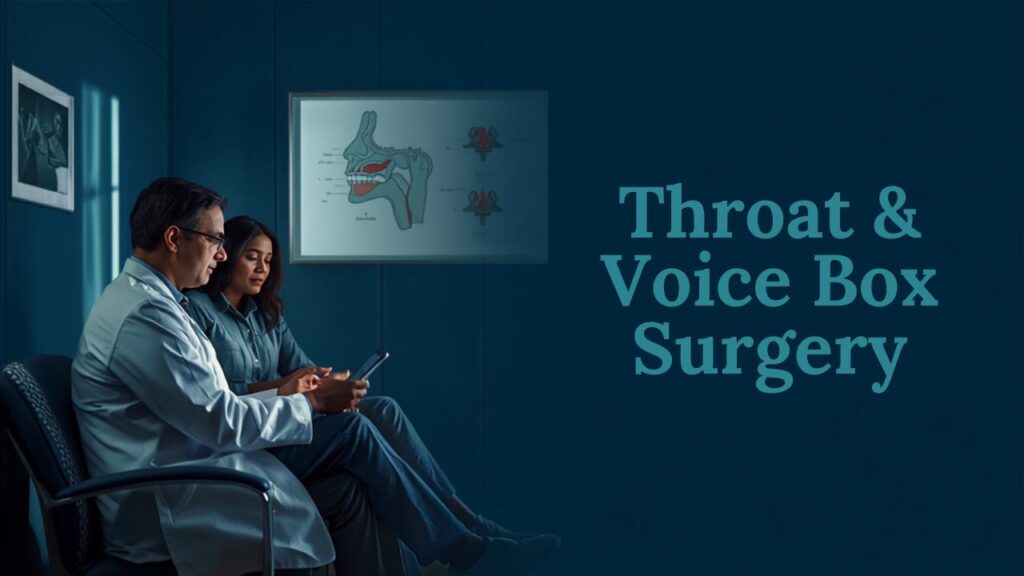
Understanding the throat and voice box
The “throat” is not a single organ. It includes several connected areas behind the nose and mouth and above the food pipe. The lower part of the throat, called the hypopharynx, lies behind and beside the voice box. The voice box, or larynx, sits at the top of the windpipe.
The larynx has three main regions:
- Supraglottis: the area above the vocal cords, including the epiglottis
- Glottis: the area containing the vocal cords
- Subglottis: the area below the vocal cords and above the windpipe
The larynx produces sound when air from the lungs passes through the vocal cords. It also helps protect the airway during swallowing. Because these structures work together, a tumour or its treatment can affect voice, breathing and the safe movement of food and liquids.
“Throat cancer” may refer to disease arising in different sites, and each site behaves differently. That is why the exact diagnosis matters. Surgery for a small vocal-cord tumour is very different from surgery for a tumour involving both the hypopharynx and larynx.
Symptoms that should not be ignored
Many throat symptoms are caused by non-cancerous conditions such as infection, reflux, allergies or voice strain. However, persistent or worsening symptoms deserve medical assessment, particularly in people who smoke, use smokeless tobacco, consume alcohol heavily or have other risk factors.
Consult an ENT or head and neck specialist if you experience:
- Hoarseness or a change in voice lasting more than two to three weeks
- Pain or difficulty while swallowing
- A sensation of food sticking in the throat
- A lump or swelling in the neck
- Persistent sore throat, cough or throat discomfort
- Ear pain without an obvious ear problem
- Noisy breathing or shortness of breath
- Blood in saliva or coughing up blood
- Unexplained weight loss, weakness or loss of appetite
Breathing difficulty, significant bleeding or rapidly increasing neck swelling requires urgent medical attention. Early assessment does not automatically mean cancer; it means the cause can be identified and treated without unnecessary delay.
How is a throat or voice box tumour diagnosed?
Evaluation usually begins with a detailed history and examination of the mouth, throat and neck. The doctor may pass a thin flexible camera through the nose to inspect the throat and larynx and assess vocal-cord movement. A numbing spray may be used to make the examination more comfortable.
If an abnormal area is seen, a biopsy is needed to confirm whether cancer is present and determine its type. A biopsy may be taken during endoscopy under anaesthesia. CT, MRI or PET-CT may then be advised to define the tumour’s size, depth and relationship to cartilage, lymph nodes and other nearby structures. Blood tests, dental assessment, nutritional review and evaluation of lung and heart function may also be required before treatment.
The final plan should be based on the full picture—not one scan or symptom alone. In a multidisciplinary tumour board, the head and neck surgeon, radiation oncologist, medical oncologist, radiologist, pathologist and rehabilitation specialists can compare options and recommend an individualised plan.
When is surgery recommended?
Surgery may be the main treatment for some laryngeal and hypopharyngeal cancers. It may also be used when cancer remains or returns after radiotherapy or chemoradiotherapy. In other situations, radiotherapy or chemoradiotherapy may offer an effective organ-preservation approach.
The decision is influenced by:
- The tumour’s exact location, size and stage
- Whether one or both vocal cords move normally
- Involvement of cartilage, the hypopharynx, thyroid, windpipe or food pipe
- Whether lymph nodes in the neck are involved
- Previous cancer treatment, especially radiotherapy
- The patient’s breathing, swallowing, nutrition and lung function
- Other medical conditions and fitness for anaesthesia
- The likelihood of preserving a useful voice and safe swallow
- The patient’s values and preferences after informed counselling
“Preserving the voice box” and “preserving its function” are not always the same. A larynx that remains anatomically present but cannot protect the lungs during swallowing or provide an adequate airway may not offer a good functional result. The team must balance cancer control with a realistic assessment of function and quality of life.
Types of throat and voice box surgery
1. Endoscopic or transoral surgery
Selected small, early tumours may be removed through the mouth without an external cut in the neck. The surgeon views the tumour with a scope and removes it using fine instruments or a laser. This is often called transoral laser microsurgery. In carefully selected situations, transoral robotic surgery may be considered.
Because there is no large external incision, recovery may be quicker than with open surgery. However, suitability depends on tumour exposure, location and depth. The amount of vocal-cord tissue removed influences the final voice. Some patients develop persistent hoarseness, and swallowing discomfort can occur temporarily.
2. Cordectomy
A cordectomy removes part or all of one vocal cord and may be suitable for certain early cancers limited to the cord. It can often be performed through the mouth. The voice usually changes because the tissue responsible for vibration has been altered. Speech therapy can help the patient use the remaining structures efficiently and reduce strain.
3. Partial laryngectomy
A partial laryngectomy removes the affected portion of the voice box while retaining enough laryngeal tissue for breathing, speech and swallowing. Depending on the site, the procedure may remove the upper part of the larynx, one side or another selected section.
The main benefit is the possibility of retaining speech through the natural airway. The voice may still sound weaker, rougher or different. Swallowing rehabilitation is particularly important because the larynx must continue to protect the lungs. Some patients need a temporary breathing opening, or tracheostomy, and a temporary feeding tube while healing and retraining take place.
Partial surgery is not appropriate for every tumour. It is reserved for carefully selected patients in whom the cancer can be completely removed while leaving a functional larynx.
4. Total laryngectomy
A total laryngectomy removes the entire voice box. It may be advised for extensive cancer, severe loss of laryngeal function or persistent or recurrent disease after previous treatment.
During the operation, the surgeon separates the windpipe from the mouth and throat and brings its end to the skin of the neck. This creates a permanent opening called a stoma. After healing, the patient breathes entirely through the stoma—not through the nose or mouth.
Removing the larynx means the natural vocal cords can no longer produce speech. It does not mean the patient can never communicate again. Voice rehabilitation may enable speech using a voice prosthesis, an electrolarynx or oesophageal speech. Counselling before surgery helps the patient and family understand these options and, when possible, meet members of the rehabilitation team in advance.
5. Pharyngectomy and laryngopharyngectomy
Cancer arising in the hypopharynx may require removal of part or all of the involved throat. When the pharynx and larynx are removed together, the operation is called a laryngopharyngectomy. Reconstruction may be needed to rebuild the swallowing passage using tissue from another part of the body, such as a free flap or regional flap.
Reconstruction is planned according to the size and location of the defect, previous treatment, general health and rehabilitation goals. It is not simply about closing a surgical wound; it helps restore a safe pathway for swallowing and supports recovery.
6. Neck dissection
Throat and laryngeal cancers can spread to lymph nodes in the neck. A neck dissection removes lymph nodes and, depending on the extent of disease, selected nearby tissues. It may be performed on one or both sides of the neck at the same time as removal of the primary tumour.
After neck dissection, some patients experience shoulder stiffness, numbness around the ear or neck, swelling, weakness or reduced movement. Physiotherapy and regular exercises can reduce long-term stiffness and help restore shoulder function.
7. Thyroid or other nearby surgery
If the tumour directly involves the thyroid gland, windpipe, food pipe or nearby soft tissues, the operation may need to include part of those structures. If all or part of the thyroid is removed, thyroid-function monitoring is necessary, and some patients need long-term thyroid hormone tablets.
What happens before surgery?
Preparation is an important part of treatment. It gives the team an opportunity to reduce risk and helps the patient enter surgery in the strongest possible condition.
Before the operation, the patient may meet a speech and swallowing therapist, dietitian, anaesthetist, physiotherapist and stoma-care nurse. The team will explain the expected incision, feeding plan, breathing changes, tubes and drains, likely hospital stay and rehabilitation goals.
Patients who use tobacco should stop as early as possible. Tobacco can impair wound healing, increase chest complications and raise the risk of future cancers. Alcohol dependence must be disclosed honestly so that withdrawal can be prevented and managed safely.
Good nutrition matters. Difficulty swallowing may lead to weight and muscle loss even before treatment begins. A dietitian may recommend high-protein, high-calorie foods or supplements. Dental assessment may be needed, especially if radiotherapy is likely after surgery.
Bring a current list of medicines and supplements. Blood-thinning medicines should never be stopped without guidance from the treating doctor. Diabetes, blood pressure and lung conditions should be optimised. Patients should also arrange practical support for the early recovery period.
The early recovery period
Recovery differs with the operation and the patient’s health. Immediately after surgery, monitoring focuses on breathing, pain control, wound healing, fluid balance and prevention of infection or blood clots. Drains may temporarily remove fluid from the neck.
Nutrition may initially be provided through a tube while the throat heals. The team decides when it is safe to begin liquids and food, sometimes after a swallowing assessment or imaging test. It is important not to eat or drink until clearance is given, because leakage or aspiration can cause serious complications.
After partial surgery, therapy focuses on safe swallowing, cough strength, breathing and voice. After total laryngectomy, the patient learns stoma care, humidification and safe suctioning. Because inhaled air no longer passes through the nose, it is not naturally warmed, filtered or humidified. A heat-and-moisture exchanger may help condition the air and reduce coughing and mucus.
Possible complications include bleeding, infection, chest infection, wound breakdown, leakage of saliva through the wound, swallowing difficulty, narrowing of the swallowing passage, shoulder weakness and blood clots. Previous radiotherapy, poor nutrition, uncontrolled diabetes and continued tobacco use can increase some risks. The surgeon should explain the risks relevant to the planned operation rather than giving a generic list.
Will I be able to speak after surgery?
The answer depends on how much of the voice box is removed.
After endoscopic surgery, cordectomy or partial laryngectomy, the patient usually retains a natural voice, although it may be rough, breathy, weak or lower in volume. Healing takes time, and the voice may continue to improve. A speech therapist teaches techniques that improve clarity and reduce damaging strain.
After total laryngectomy, speech can be restored in three main ways:
- Tracheoesophageal puncture and voice prosthesis: A small passage is created between the windpipe and food pipe. Air redirected through a one-way prosthesis causes tissue to vibrate and produce sound. The prosthesis requires cleaning, follow-up and periodic replacement.
- Electrolarynx: A handheld device produces vibrations that are shaped into words by the mouth. It can often be learned relatively quickly and may be useful soon after surgery.
- Oesophageal speech: The patient learns to release swallowed or injected air from the food pipe to create sound. This requires focused training and may not suit everyone.
Writing, phone-based text-to-speech tools and communication boards are helpful while a new speaking method is being learned. Rehabilitation works best when it begins as part of treatment planning, not as an afterthought.
Eating and swallowing after surgery
Swallowing outcomes depend on the tumour, the tissues removed, reconstruction, nerve function and any additional radiotherapy. Patients may begin with tube feeding and gradually progress from liquids to soft and then regular food as advised.
Exercises from the speech and swallowing therapist help improve tongue movement, airway protection and coordination. Small bites, an upright posture and specific head positions may be recommended. These strategies should be personalised; patients should not copy another person’s swallowing exercises without professional assessment.
After a total laryngectomy, the airway and swallowing passage are permanently separated, so food does not normally enter the lungs in the same way it can when the larynx is present. However, narrowing, scar tissue or problems with the reconstructed passage can still affect swallowing and may require evaluation.
Life with a permanent neck stoma
A permanent stoma changes how a person breathes, but it does not prevent an active and meaningful life. Patients learn a new routine for cleaning, humidification and protecting the opening.
Water must not enter the stoma because it leads directly to the lungs. Shower protection is essential, and swimming is generally unsafe unless a specialist team provides specific equipment, training and clearance. Dust, smoke and very cold or dry air can irritate the airway, so suitable covers and heat-and-moisture exchangers are useful.
Friends, family and emergency personnel should know that oxygen and rescue breathing must be delivered through the stoma after total laryngectomy. Carrying a medical alert card can be helpful. Travel remains possible with preparation, spare supplies and advice from the clinical team.
Pathology results and additional treatment
The tissue removed during surgery is examined under a microscope. The final pathology report describes the cancer type and size, surgical margins, lymph-node findings and other features that estimate the risk of recurrence.
Some patients need no further immediate treatment and move into surveillance. Others may be advised radiotherapy or chemoradiotherapy after surgery because of features such as involved margins, spread beyond a lymph node or more extensive local disease. The recommendation is usually discussed in a tumour board.
Regular follow-up is essential. Appointments may include examination, endoscopy, imaging, thyroid testing, dental review, nutrition support and speech or swallowing assessment. Patients should report new symptoms between scheduled visits rather than waiting for the next appointment.
Questions to ask your surgeon
An informed patient is better prepared for treatment and recovery. Consider asking:
- What is the exact site, type and stage of my cancer?
- Is surgery the best option for me, and what are the alternatives?
- Can the tumour be removed through the mouth?
- Will you remove part or all of my voice box?
- Will I need a temporary or permanent stoma?
- How is my voice expected to change?
- When will speech and swallowing rehabilitation begin?
- Will I need reconstruction or neck dissection?
- What complications are most relevant in my case?
- How long might I need tube feeding and hospital care?
- Could I need radiotherapy or chemotherapy after surgery?
- Who should I contact if I develop a problem after discharge?
It is reasonable to bring a family member, write down the answers and seek a second opinion when the proposed treatment will permanently change speech or breathing.
A team-based approach to cancer control and function
Throat and voice box surgery is highly individualised. The best operation is not automatically the smallest or the largest. It is the one that offers sound cancer treatment while accounting for breathing, swallowing, communication, general health and the patient’s own priorities.
Dr Sumanth Bollu is a Head & Neck Surgical Oncologist with experience in treating cancers of the throat, voice box, oral cavity, thyroid, salivary glands and skull base. Evaluation includes careful review of the tumour and a discussion of surgical, non-surgical and rehabilitation options so that patients and families understand both the treatment goal and the likely functional changes.
If you have persistent hoarseness, difficulty swallowing, a neck lump or a confirmed throat or laryngeal tumour, timely specialist assessment can clarify the diagnosis and available options. Bring previous biopsy reports, scan images, discharge summaries and a complete medicine list to your consultation.
Call to action: To request a consultation with Dr Sumanth Bollu for throat or voice box cancer evaluation, use the appointment or contact options on this website.